



Thank you for contacting us.
We will respond as soon as possible.

CERTIFICATIONS

GECO PLASTER
PRE-MIXED DEHUMIDIFYING PLASTER WITH HIGH THERMAL INSULATION PERFORMANCE. 230 kg/m3 (14.4 lb/ft³).
GECO PLASTER is a pre-mixed dehumidifying plaster with high thermal insulation capacity. Macroporous hydraulic binders mixed with GECO ADDITIVE and virgin EPS beads coated with the E.I.A. additive form a light, open structure that lets the moisture in the wall evaporate quickly.
It solves two problems at once: it dries out walls affected by rising damp and, with a thermal conductivity of 0.063 W/mK (0.44 BTU·in/(h·ft²·°F)), it insulates them, preventing surface and interstitial condensation and the mould that comes with it. Total thickness from 3 to 20 cm (1.18 to 7.87 in), applied by hand or by plastering machine.
It is the core of the GECO dehumidifying system: GECO ANTISALT on salt-affected walls, GECO PLASTER, a breathable skim coat (ECAP® ADP or a mortar with GECO ADDITIVE) and breathable silicate or silicone finishes.
NOTE
- Dry density: 230 kg/m³ (14.4 lb/ft³) (dry mortar 245 kg/m³ (15.3 lb/ft³), UNI EN 1015-10).
- Thermal conductivity λ: 0.063 W/mK (0.44 BTU·in/(h·ft²·°F)).
- Compressive strength: 1.28 N/mm² (186 psi); flexural strength: 0.38 N/mm² (55 psi).
- Water vapour diffusion resistance μ: 9; capillary water absorption class W1 (EN 998-1).
- Adhesion: 0.1 N/mm² (15 psi) (UNI EN 1015-12).
- Sound insulation: Rw 42 dB, ΔRw 7 dB (6 cm (2 3/8 in) on an 8 cm (3 1/8 in) hollow-block wall).
- Reaction to fire: A2-s1,d0 (EN 13501-1).
- Consumption: 2.30 kg/m² per cm of thickness (1.20 lb/ft² per inch of thickness); one bag ≈ 6 m² (≈ 65 ft²) at 1 cm (13/32 in).
- Total thickness 3-20 cm (1.18 to 7.87 in): first coat approx. 1 cm (13/32 in), then coats of max. 2.5-3 cm (0.984 to 1.18 in).
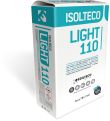
- 60 L (15.9 US gal) bags; pallet of 44 bags.
PACKAGING
- Dehumidification, refurbishment and insulation of external walls.
- Dehumidification and internal insulation of perimeter and partition walls.
- Thermal insulation of internal ceilings and external porches.
- Elimination of thermal bridges (pillars, beams, slab edges).
- Prevention and elimination of surface and interstitial condensation.
- Protection of façades, beams and pillars from rain.
DOWNLOADS
SHARE
