

Thank you for contacting us.
We will respond as soon as possible.

CERTIFICATIONS


REGUPOL vibration 800
VIBRATION ISOLATION MAT
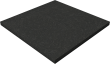
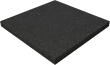
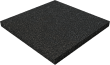
REGUPOL vibration 800 is a vibration isolation and structure-borne sound decoupling material made of rubber fibres and granules – largely recycled from vehicle tyres – bonded with polyurethane. It is designed for permanent static loads up to 0.8 N/mm² (116 psi) (rare short-term peaks up to 1 N/mm² (145 psi)) and, depending on load and thickness, reaches natural frequencies as low as 10 Hz.
It protects buildings and people from the vibrations of railways, roads, machines and plant, improving comfort and preserving the structure. Selection is straightforward: the type must match the permanent load actually acting on the bearing – REGUPOL vibration 800 is the right choice up to 0.8 N/mm² (116 psi). Cradle to Cradle Certified® Bronze.
NOTE
- Material: polyurethane-bonded rubber fibres and granules.
- Available formats: rolls 8000 × 1250 mm (315 × 49 in), thickness 10 mm (13/32 in); customized thicknesses on request.
- Maximum static load: 0.800 N/mm² (116 psi); rare short-term peaks up to 1.000 N/mm² (145 psi).
- Static modulus of elasticity: 1.2 - 2.9 N/mm² (174 - 421 psi) (based on EN 826); dynamic modulus: 3.6 - 18.2 N/mm² (522 - 2,640 psi) (based on DIN 53513).
- Mechanical loss factor: 0.18 (DIN 53513); compression set: 3.7 %.
- Fire behaviour: B2 (DIN 4102), E (EN 13501-1).
- Cradle to Cradle Certified® Bronze.
PACKAGING
- Resilient support for buildings and foundations exposed to vibrations from railways, tramways and roads.
- Decoupling of machines, plant and technical equipment from the building structure.
- Floating floors and slabs (mass-spring systems) and structure-borne sound decoupling of building elements.
- Choice of type: the permanent static load actually acting on the material must fall within its load range.
DOWNLOADS
SHARE
